> For the complete documentation index, see [llms.txt](https://docs.struct.com/llms.txt). Markdown versions of documentation pages are available by appending `.md` to page URLs; this page is available as [Markdown](https://docs.struct.com/changelog/october-2025.md).
# October 2025
This month's update features enhancements to business rules, category inheritance and extended details to our API documentation.
As days shorten and the weather turns gray, we remain committed to delivering exciting new features. This month's release features a lot of bug fixes, but also some new features that we really think you will like.
### Warn users, and use attributes from primary categories with business rules
{% columns %}
{% column width="50%" %}
#### Throw a warning
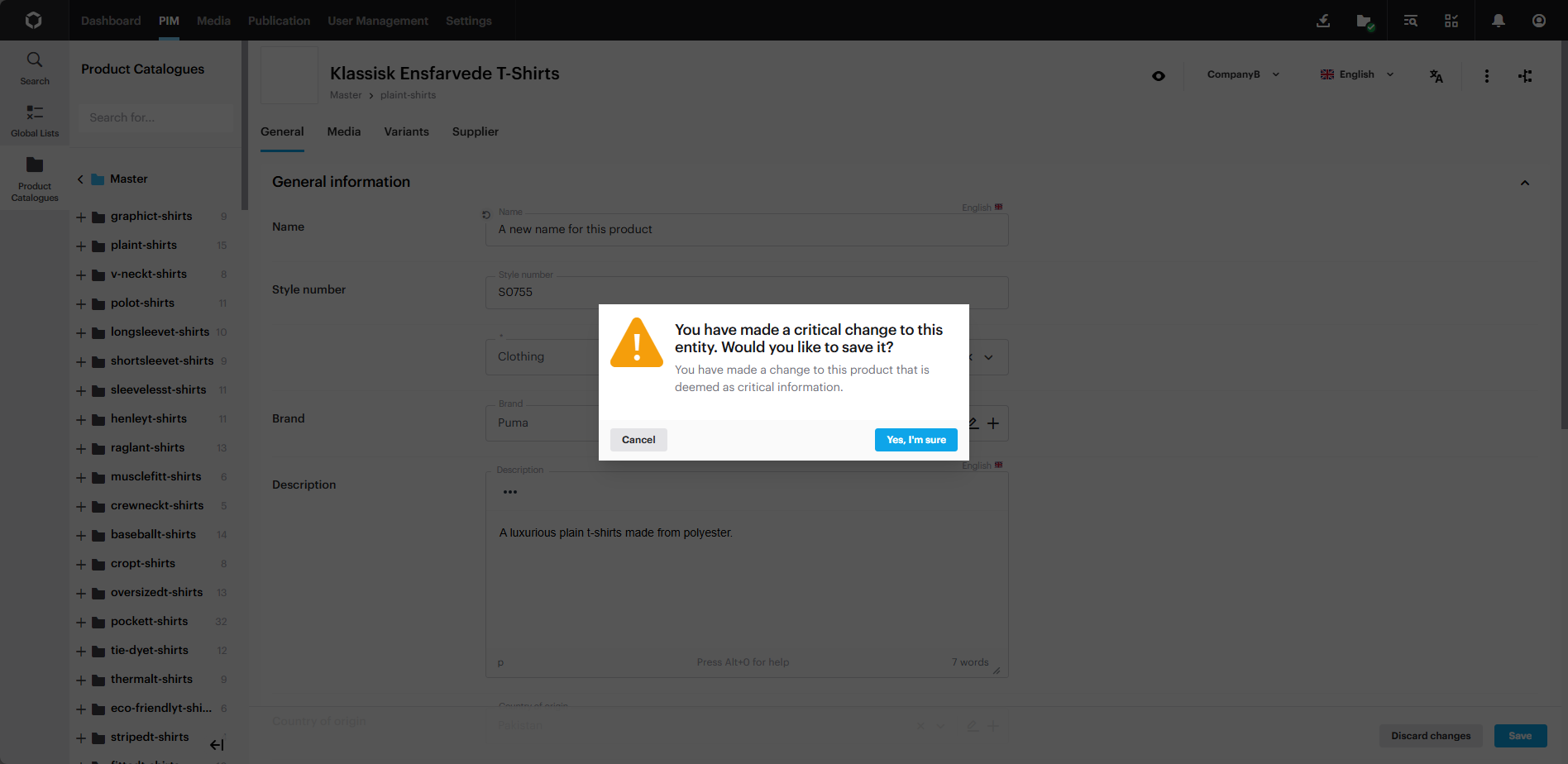
Set up business rules to warn users when saving changes to critical entities. This helps prevent unintended product alterations and encourages users to review their modifications.
The warning is available inside the actions selector.
{% endcolumn %}
{% column width="50%" %}
{% endcolumn %}
{% endcolumns %}
{% columns %}
{% column %}
{% endcolumn %}
{% column %}
#### Use primary category attributes
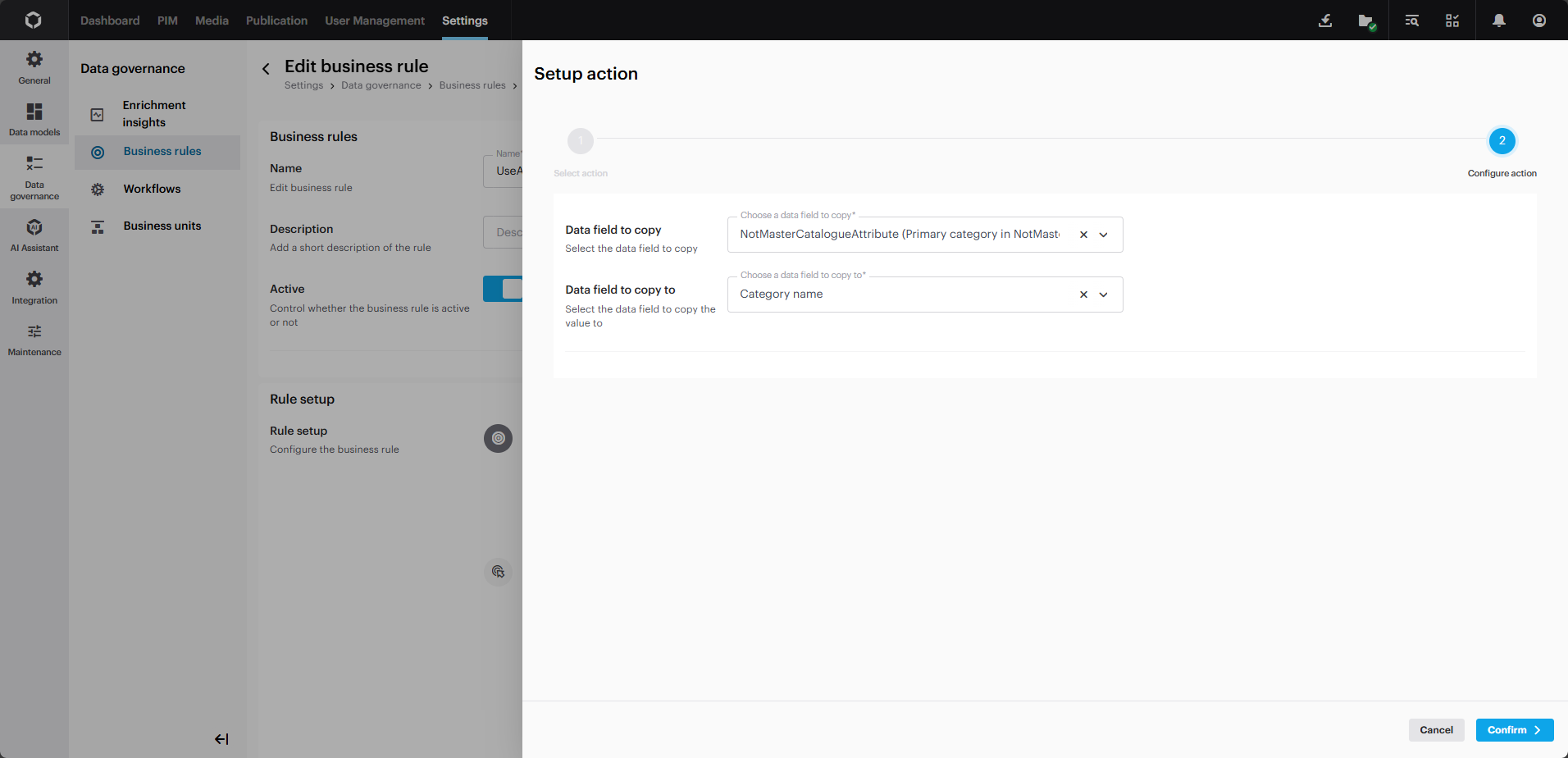
Previously, you couldn't access attributes from primary categories outside the master catalogue. This has now been resolved, allowing you to retrieve these attributes.
{% endcolumn %}
{% endcolumns %}
### Category inheritance
With attribute inheritance from parent categories, you can now auto-update sub-categories efficiently. This feature simplifies keeping data consistent across all category levels, ensuring changes at the top reflect instantly in all sub-categories.
The inheritance will take place from the level you are at. If you set up inheritance from the first subcategory, its descendants will inherit its values.
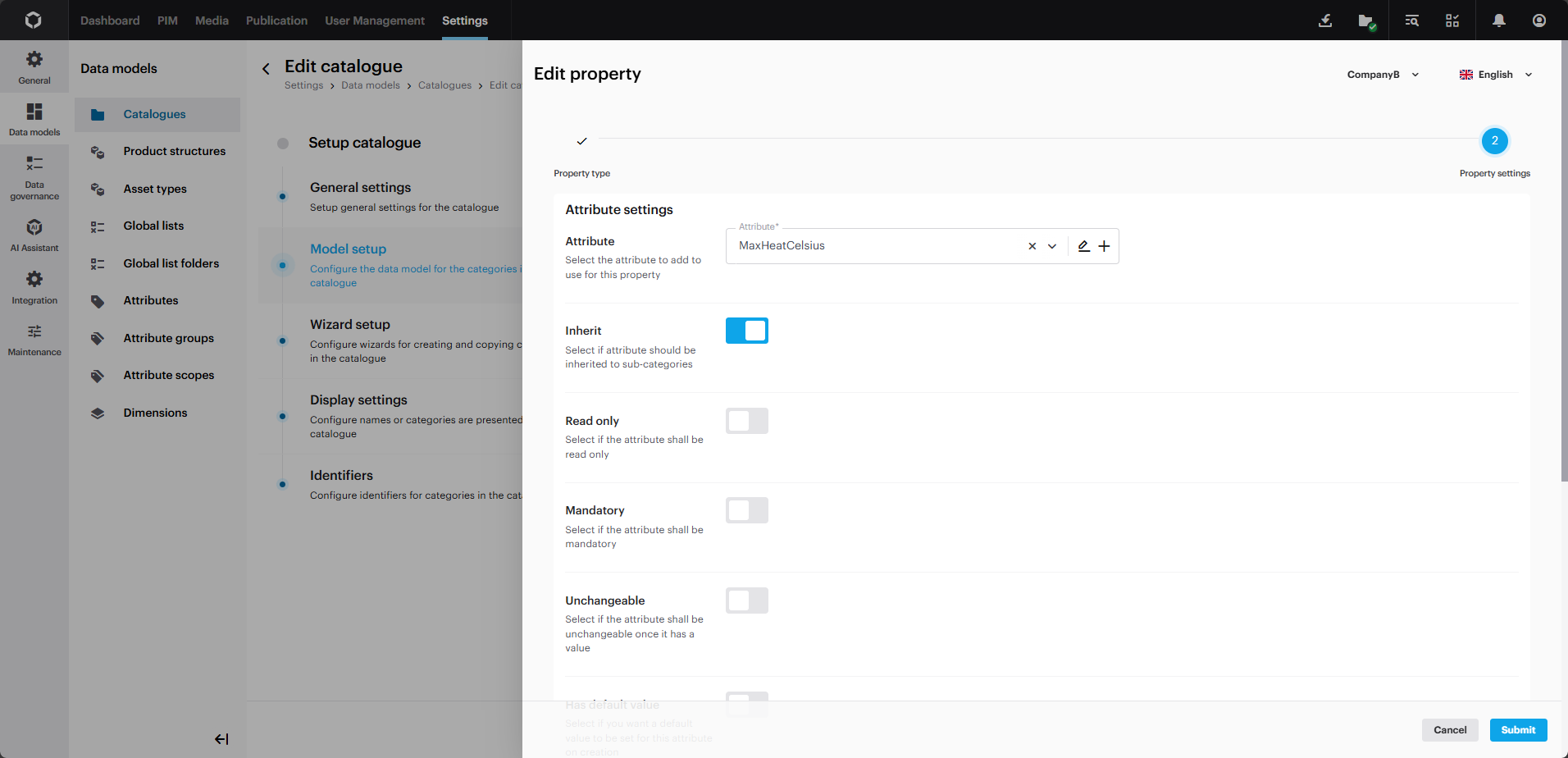
To set up category inheritance, go to 'Catalogues', and edit the catalogue model you would like to add inheritance to. Inside the model, add or edit attributes and toggle the 'Inherit' button.
{% hint style="warning" %}
**Warning!** Category webhooks trigger for every change made to categories. Depending on your setup, this might lead to a lot of unnecessary payloads being sent. Please check your webhook setup before setting up category inheritance.
{% endhint %}
### New examples for our models in the API
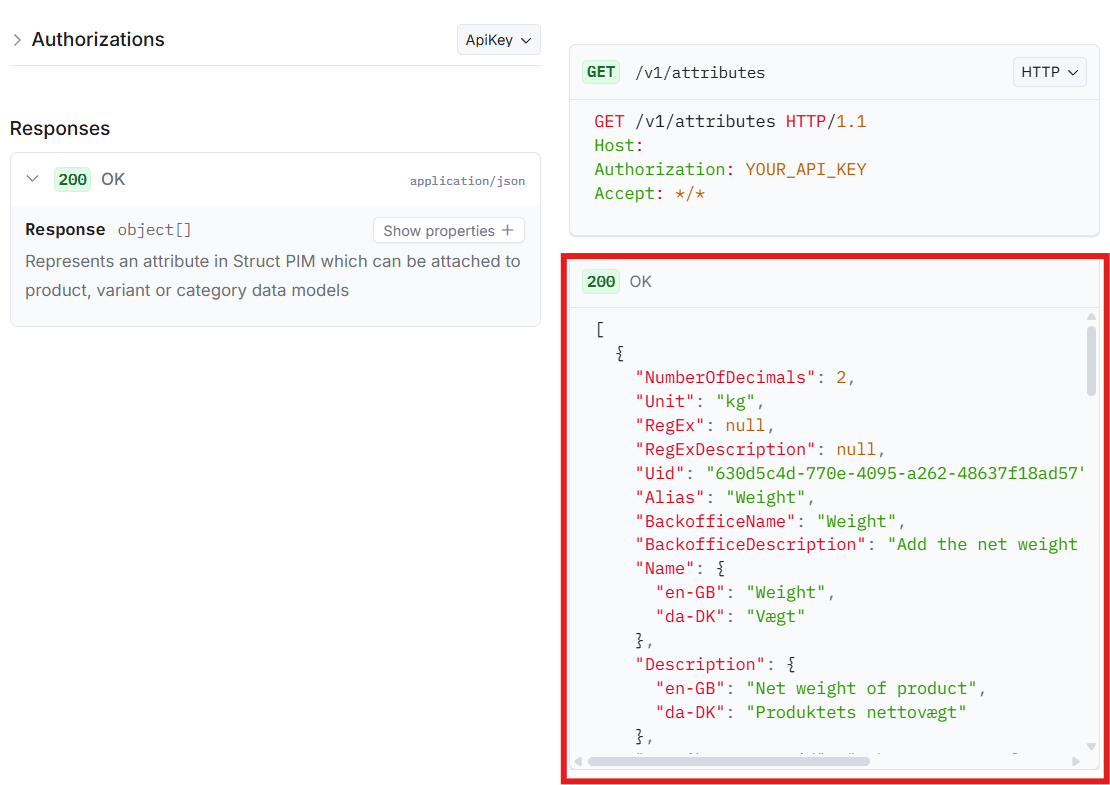
The OpenAPI description of our Public API now includes examples and detailed descriptions of enums. This enhancement ensures that our endpoint documentation provides clear examples of types and values required for each property.
### Releases in October
* [October 28th](/changelog/october-2025/october-28th.md)
* [October 27th](/changelog/october-2025/october-27th.md)
* [October 23rd](/changelog/october-2025/october-23rd.md)
* [October 8th](/changelog/october-2025/october-8th.md)
* [October 2nd](/changelog/october-2025/october-2nd.md)
{% hint style="info" %}
**Fun Fact: The Great Emu War—and How Struct PIM Wins Every Time**
In 1932, Australia declared war on emus—giant, flightless birds. Despite their best efforts and plenty of firepower, the emus proved too fast, clever, and slippery. The army didn’t stand a chance.
Luckily, unlike those soldiers, you don’t have to fight wild product data alone. This October, Struct PIM gives you additional tools to tame the chaos.
While emus once outsmarted an army, your data now marches in formation. No feathers lost, and every update lands exactly where it should. 🦩💥
*Battle lesson from 1932: always pick the right tools before facing fast, unpredictable opponents—emus or data.*
{% endhint %}
---
# Agent Instructions
This documentation is published with GitBook. GitBook is the documentation platform designed so that both humans and AI agents can read, navigate, and reason over technical content effectively. Learn more at gitbook.com.
## Querying This Documentation
If you need additional information that is not directly available in this page, you can query the documentation by asking a question.
Perform an HTTP GET request on the following URL with the `ask` and `goal` query parameters:
```
GET https://docs.struct.com/changelog/october-2025.md?ask=&goal=
```
`ask` is the immediate question: it should be specific, self-contained, and written in natural language.
`goal` is what the user is ultimately trying to achieve, the reason they need the answer. Sharing it helps GitBook give you a better, more relevant answer. A goal is most helpful when it describes the outcome the user wants rather than restating the question. For example, with `ask=how do I create an API token`, a goal like `automate deployments from our CI pipeline` lets GitBook tailor the answer to that use case.
The response will contain a direct answer to the question and relevant excerpts and sources from the documentation.
Use this mechanism when the answer is not explicitly present in the current page, you need clarification or additional context, or you want to retrieve related documentation sections.